Showing posts with label Travels. Show all posts

Wednesday, February 23, 2011

Roman Ruins, Libya

Leptis Magna, Libya

From: http://whc.unesco.org/en/list/183 
"Brief Description
Leptis Magna was enlarged and embellished by Septimius Severus, who was born there and later became emperor. It was one of the most beautiful cities of the Roman Empire, with its imposing public monuments, harbour, market-place, storehouses, shops and residential districts."
 
Leptis Magna is a UNESCO World Heritage Site and was a prominent city of the Roman Empire.  The ruins are at Al Khums, Libya, about 130 kms east of Tripoli.  Originally settled by the Phoenicians around 1100 B.C. it was overtaken by the Romans in the 2nd century B.C.

Arch of the Roman emperor Lucius Septimius Severus (A.D. 146-211)
Hadiranic Roman baths 126-127 A.D. were the most luxurious baths in Libya.


Sabratha, Libya
These Roman ruins were well preserved under sand for many centuries.

Sabratha is considered the most beautiful ruins along the Mediterranean and is a UNESCO World Heritage Site.  Originally a Carthaginian (500 B.C.) Trading Post, then an important settlement to the Greeks around 2nd century B.C., the city prospered under Romans which are the ruins we see today.

Rear view of the partially restored outer ring of the theater.
Ruins .......
Theater of Sabratha (2nd century A.D.)
View towards the Curia or Council Chambers forecourt
There are columns everywhere from various market places (vegetable, fabric and more).
It is a wonderful area for walking around.  Wherever you go there are beautiful views of the Mediterranean Sea.
The Mausoleum of Bes, 2nd century B.C., mostly rebuilt by Libyan archaeologists in the 1920's.  Nowadays it is impossible to tell the original work from the restorations.
Close up of the lions on the column/monument.

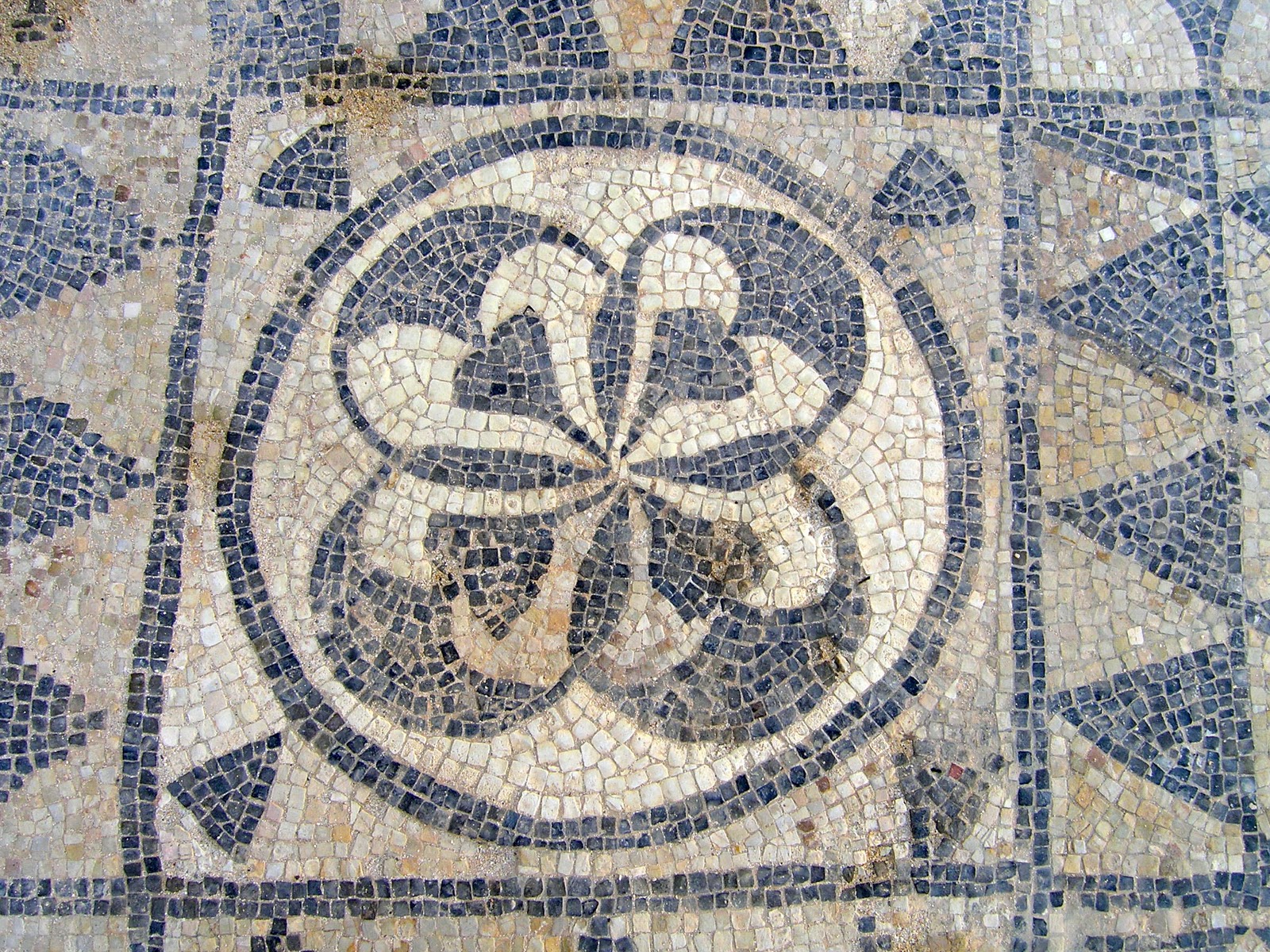
Shown below are some of the mosaics still on the ground at Sabratha (I think at the seaward baths).

Please keep the people of Libya in your thoughts and prayers at this difficult time for them.  When Libya opens up for tourism I hope that I have shown you there is much to see in this country.  We went on tour with Travel Dynamics, experts in small cruise ship tours and we thank them for their wonderful hospitality.

http://www.traveldynamicsinternational.com/

Next stop on this tour was Tunisia where the recent troubles started.  Tomorrow I will show the photographs from Tunisia.

Tuesday, February 22, 2011

Cyrene, Libya

We visit the Greek ruins at Cyrene, Libya, a UNESCO World Heritage site.  According to legend Cyrene was a Libyan Amazon queen who founded a city of that name (Cerne) along the coast.  In the center can be seen the Temple of Apollo, 6th century BCE, rebuilt after an earthquake and then rebuilt again after the Jewish rebellion in 115 CE.

The Gigantic Forum built by King Ptolemy 8 of Egypt as a gymnasium, 2nd century BCE.  Then rebuilt by the Romans as a Forum in the 1st century CE. 
Temple of the Sun-god Zeus, 6th century BC, rebuilt during the 2nd century AD.
Fertility goddess statues outside the Sanctuary of Demeter and Kore, only women were permitted to enter the sanctuary during an annual festival.
 The Sanctuary of Demeter and Kore.
The main theater in Cyrene is believed to be the oldest structure at the complex, 6th century BCE.  Although not large, probably seated 1,000, it has a commanding view of the valley below and on a clear day the Mediterranean Sea is visible.
The statue of Nike (minus wings) stands atop what is called the Naval Monument believed to be built by the Ptolemies in the 3rd century BCE.

The lions guard the entrance to the Temple of Apollo, 6th century B.C., rebuilt in 4th century B.C., and restored in 2nd century A.C.
The Fountain of Apollo, drinking from the fountain was believed to be good for your health.  From here we visited the museum where some statues from Cyrene are on display and many mosaics.

Sunday, February 20, 2011

Tripoli, Libya


Photo: Kay Yanev

Libya is in the news today with protests and uprisings by the people in Tripoli and Benghazi.  The news reports are that there has been a lot of bloodshed in Tripoli and Gadhafi's foreign mercenaries are fighting against the people.  A bloodbath!  My heart goes out to the people of Libya. 

At the time of our visit Libya had just opened up to American tourists.  The people were friendly and it was refreshing that they had not yet learned to bother the tourists and would leave us alone.  While waiting outside the museum for the rest of our group two young men spoke with me, they were interested in the USA and had many questions.
The Roman arch of Roman co-Emperor Marcus Aurelius (Antoninus Augustus) dates from A.D. 163.  Marcus Aurelius lived for 59 years, between 121-180 A.D.  This arch was brought to Tripoli from Leptis Magna.
We visit a mosque which is beautifully decorated inside. After the mosque we went with Kay and Peter for lunch in the souk, we had a recommendation and directions.  The restaurant was near a carpet shop .... well there were many carpet shops but we found the place and the food was good.
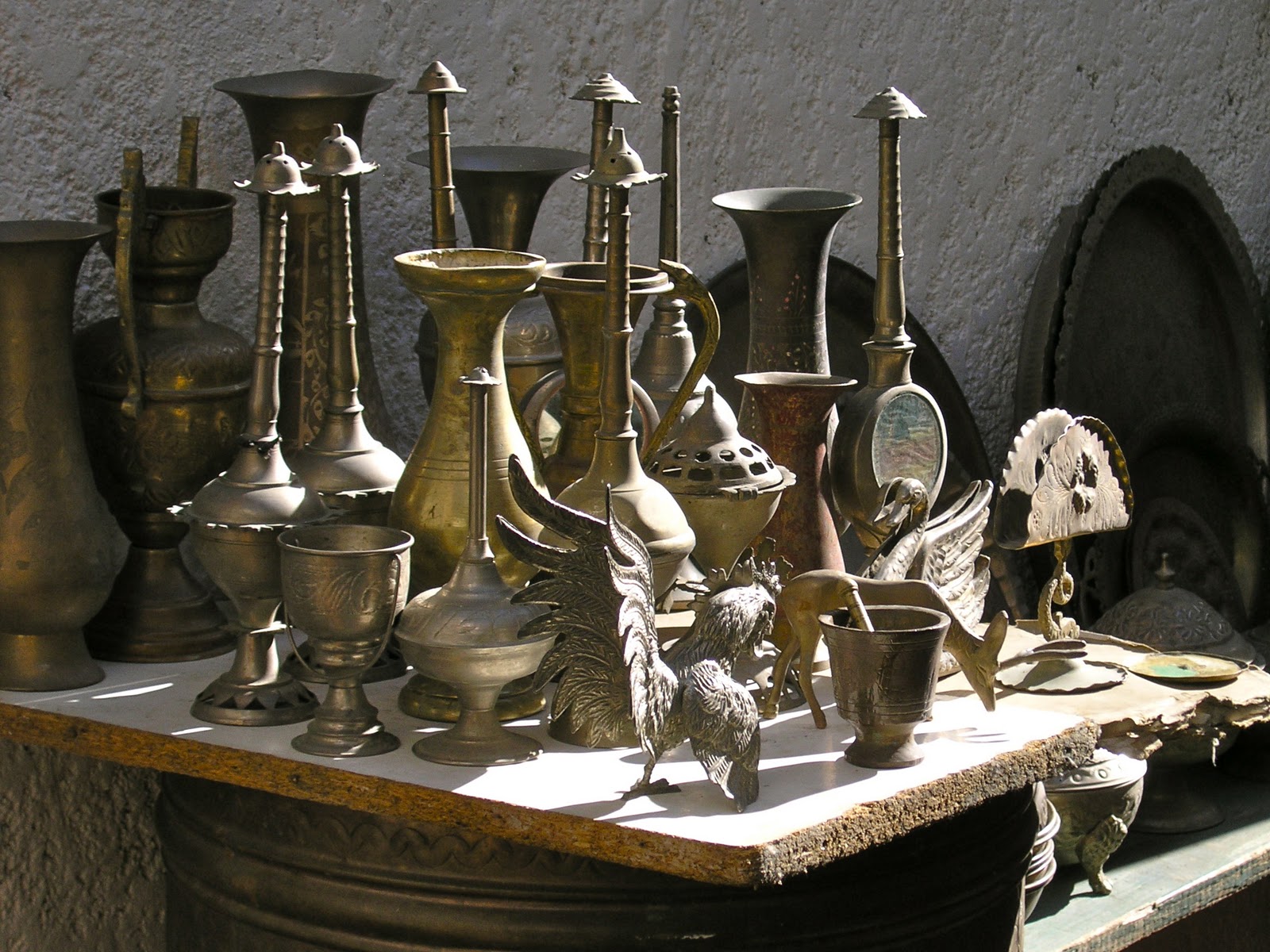
Walking through the souk I photographed the various items for sale along with a Muammar Gaddafi plate.  His photos were everywhere but I am not going to feature them.
We leave the souk and go to a museum.  It is not as wonderful as the Bardo in Tunis but had interesting mosaic tiling displays, some Roman statues and for some reason a VW bug.  Was it Gaddafi's?  I do not remember.
The young girl photographed below asked me to take her photograph.  Over the years I have had photo requests and often wonder why.  She did not ask for money but will not see the photo.  I tell myself that I should carry a Polaroid camera for just such moments.  I hope this little girl and her family remain safe during these terrible times in Libya.

Sunday, February 13, 2011

South Africa

I have finished South Africa and I will have to think about which visit to what city, country or area I post next.  I am off to Louisiana for a few days ......
Protea's such as this were growing wild in this region, it was beautiful and brightened the countryside.
We visit the (Harold Nixon Porter) Botanic Gardens, a spectacular stop along the Garden Route drive.
Asteraceae (Daisy Family) Felicia aethiopica, Garden Felicia (E) - The Garden Felicia is used as a dye.
Rutaceae (Rue/Buchu/Citrus Family), Agathosma ovata, Falso Boegoe (E), Basterbogoe (A).  A tea of False Buchu, blue gum, and bokboegoe relieves indiegstion, colic, cramps, asthma, colds and coughs.
Geraniaceae (Geranium Family), Pelargonium 'Fragrans' - has small grey-green strong aromatic leaves and planted in sandy soil.
Gentianaceae (Gentian Family), Orphium frutescens, Sea Rose (E), Teringboa (A).  The Sea Rose pollen is released through holes at the top of the twisted anthers by the buzzing of insects.
Asteraceae (Daisy Family), Helichrysum petiolare, Curry Bush (E), Kooigoed (A).  The Curry Bush is aromatic herbs or shrubs with densely hairy or woolly leaves and persistent flower heads.
Asphodelaceae (Asphodel Family), Bulbine frutescens, Stalked Bulbine (E), Balsemkopieva (A), Intelezi (X).  Stalked Bulbine can be used in the treatment of wounds, rashes and sores.
Iridaceae (Iris Family), Aristea major, Blue Sceptre (E), Blousuurkanol (A).  The Blue Sceptre has attractive flowers that open in the morning and close by midday.
Geraniaceae (Geranium Family), Pelargonium cordifolium, Heart-leaved Pelargonium (E), Wildemalva (A).  The deep green, aromatic leaves of the Heart-leaved Pelargonium can vary from smooth to hairy.
Geraniaceae (Geranium Family), Pelargonium cucullatum, Hooded-Leaf Pelargonium (E), Wildemalva (A).  Hooded-Leaf Pelargonium can be used to treat colic and diarrhea.
A protea with no name plate at the gardens ..... must be common.
Oxalidaceae (Wood Sorrel Family), Oxalis incarnata.  Very occasionally you might be lucky enough to find  a double flowered form of Oxalis incarnata.
This gal/guy was walking freely around the gardens, slowly but surely :))
Proteaceae (Protea Family), Leucadendron discolor, Piketberg Conebush (E), Rooitolbos (A).  The Piketberg Conebush responds well to cultivation and is a good cut flower.
Polygalaceae (Milkwort Family), Polygala fruticosa, Heart-leaved Pelargonium (E) - roots form part of blood-purifying decoctions and help improve sinusitis.

These last two photos were in the wetlands section at the gardens.


I hope you have enjoyed South Africa.  Ah, where next .....?